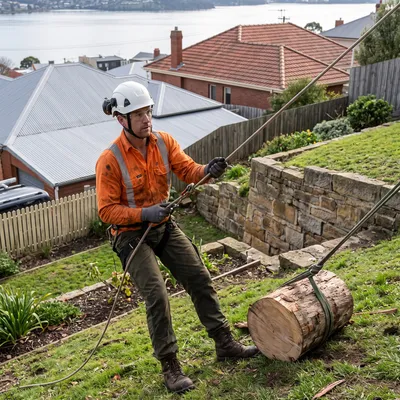
Steep hillside blocks
Mount Stuart, West Hobart and parts of Sandy Bay sit on slopes that change every rigging plan. We use redirects and ground anchors to keep limbs off roofs sitting below the tree.
01 HOBART & TASMANIA
Hobart arborists handling tree removal, dangerous tree dismantles, pruning and stump grinding from Sandy Bay through to Taroona. Steep hillside blocks, big blue gums leaning off the mountain side, storm work after a westerly off kunanyi, that is the bread and butter of what my crew does. Ring me or send the form, you'll get a written quote back the same day.
03 HOW IT WORKS
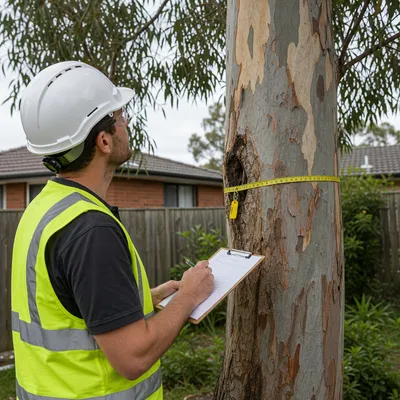
Pick up the phone or fill out the enquiry form. Tell me what's on the block, how the access reads from the street, and what's sitting close by, house, shed, fence, lines.
We come out, walk the job, check the drop zone, look at the rigging anchors and pick up on anything that changes the plan.
You get the quote in writing, broken into line items so you can see what the climb, the rigging, the chipping, the stump and the cleanup each cost.
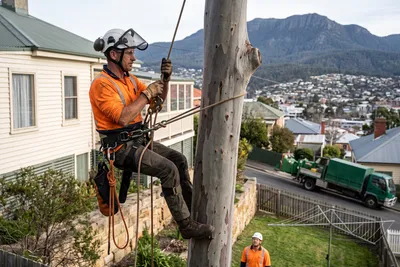
Climber, ground crew, EWP or crane depending on what the block needs. Sectional dismantles with controlled rigging where the tree is close to anything that matters.
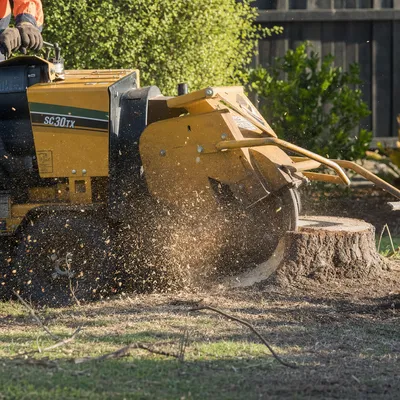
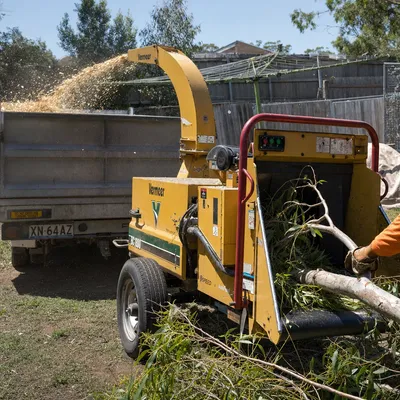
Stump ground out below ground level if you want it gone. Green waste through the chipper, drop zone raked over, paths blown clean before we drive off.
24/7 STORM & EMERGENCY
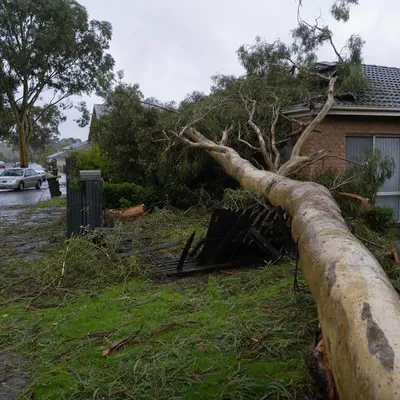
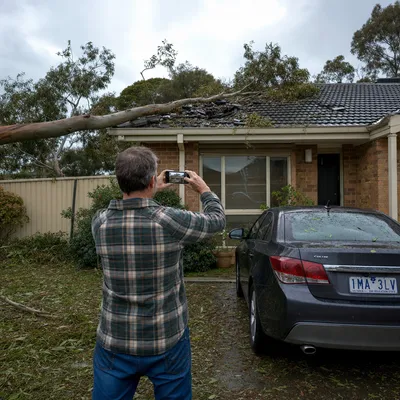
Same day attendance across Hobart and Tasmania. We stabilise the tree first, document it for your insurer, then schedule the full removal.
If a tree or branch is touching powerlines, stay clear and call TasNetworks on 13 20 04 or 000.
IF A TREE COMES DOWN
04 LOCAL CONDITIONS
Mount Stuart, West Hobart and parts of Sandy Bay sit on slopes that change every rigging plan. We use redirects and ground anchors to keep limbs off roofs sitting below the tree.
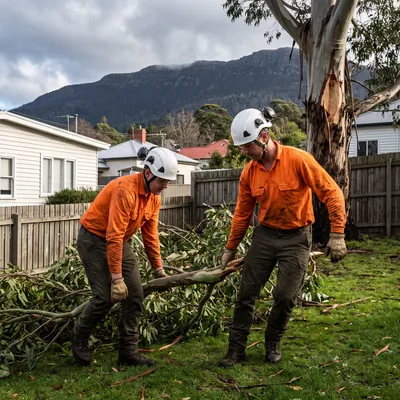
Wind funnels off kunanyi/Mount Wellington and rips through canopies on the western suburbs. Half our storm callouts are limbs torn off blue gums on the mountain facing side.
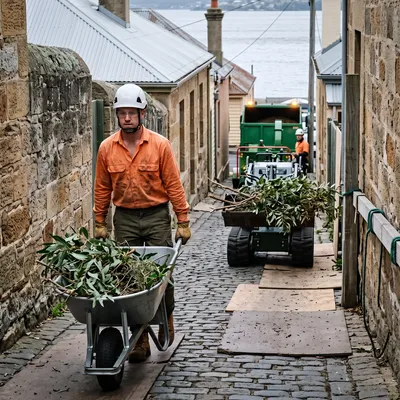
Battery Point cottages, Glebe terraces and the older parts of North Hobart have tight lane access and stone walls. We bring small footprint gear and walk the route before the truck rolls in.
Every job is planned to protect the tree, the property and the cleanup area. Locally owned, qualified, and quoted on site, not over the phone.
THE HOBART TREE REMOVAL CREW
05 RECENT WORK
 BEFORE
 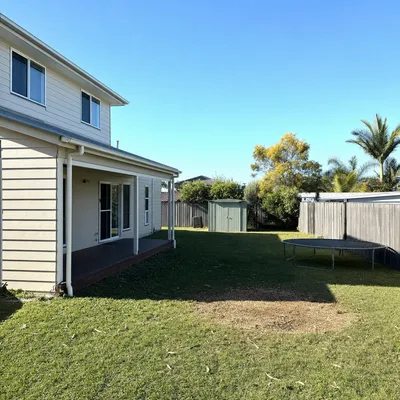 AFTER
AFTER 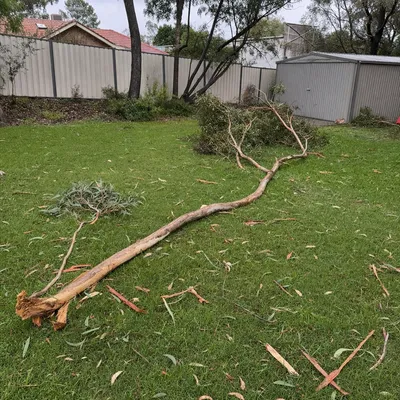 BEFORE
 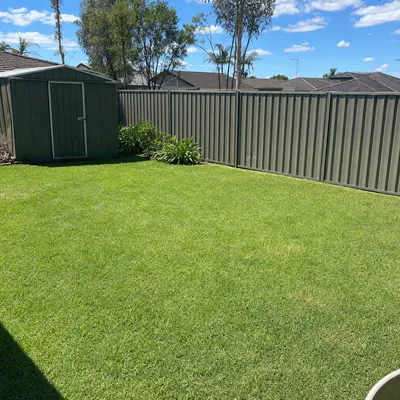 AFTER
AFTER 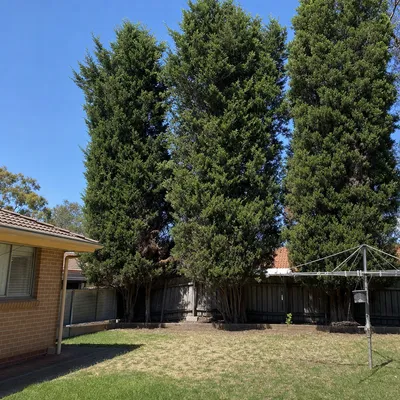 BEFORE
 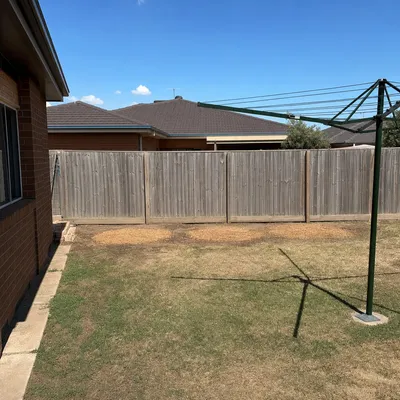 AFTER
AFTER 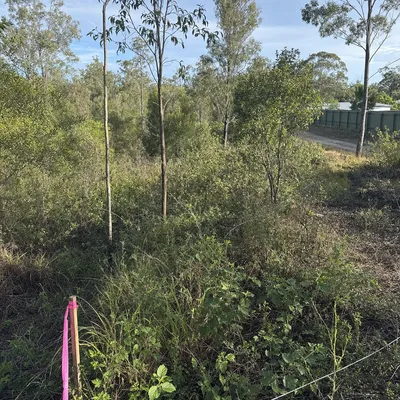 BEFORE
 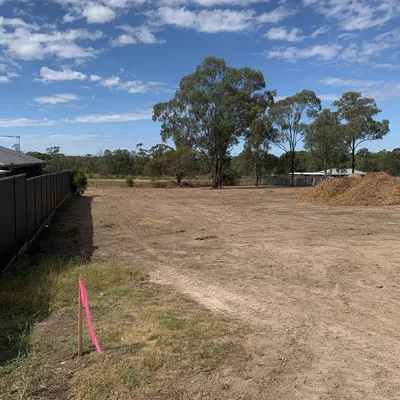 AFTER
AFTER 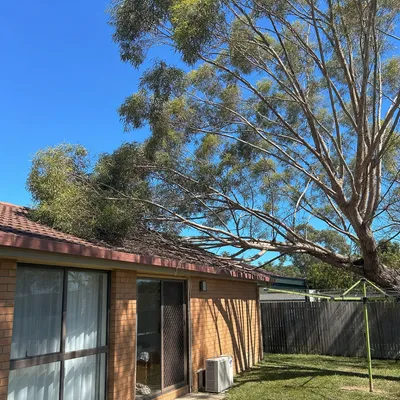 BEFORE
 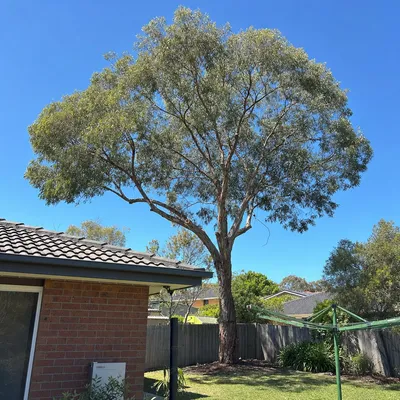 AFTER
AFTER 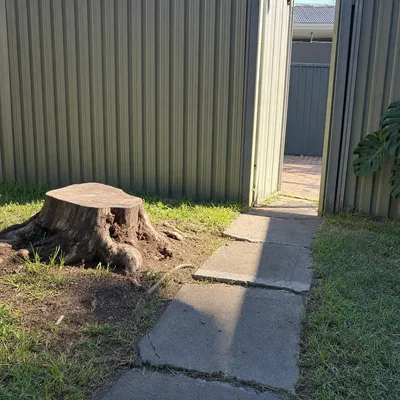 BEFORE
 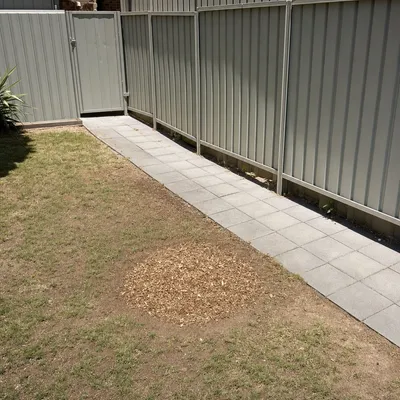 AFTER
AFTER 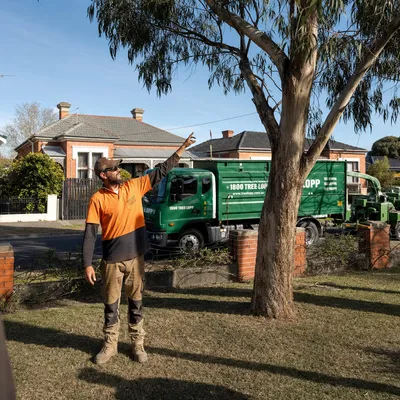
06 PRICING
Backyard tree under 6m, easy walk in, no rigging needed
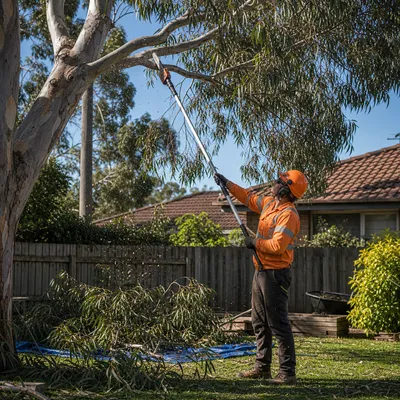
In scope: Climb or pole saw, drop sectionally, chip through, light rake out
6 – 12m gum or similar on a standard backyard
In scope: Climber on the ropes with light rigging, lowering each limb, chipping and ground tidy
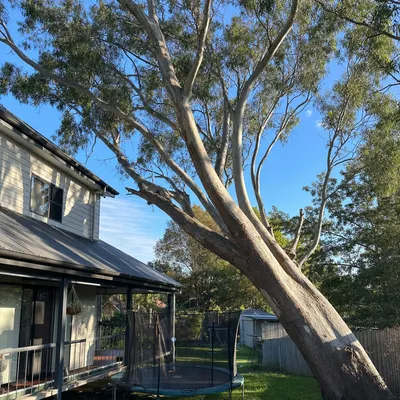
Over 12m, leaning toward a house, near service lines or on a hillside section
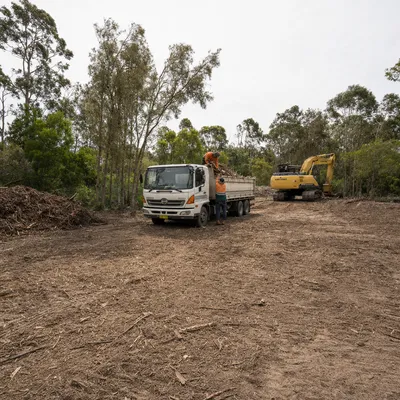
In scope: EWP or crane, full rigging plan, TasNetworks coordination if lines are in the picture, all material removed
After hours, weekends, storm callouts
In scope: Sits on top of the base rate. Make safe first, schedule the full takedown after.
A tree you can drop straight onto open lawn is fast. A tree behind a Battery Point cottage with stone wall access and a 1m gate doubles the time on the ground.
Close to a house, service lines or a pool means every limb on a rope. That setup and the hours it eats are most of the price gap between a cheap quote and a fair one.
Grinding below ground and hauling chips off site are both add ons. Leave the stump, or keep the chips as mulch in the garden, and the quote drops.
07 CHOOSING A CREW
Public liability insurance current
Ask for the Certificate of Currency before they pick up a saw. Anything light on cover is a red flag for tree work near homes.
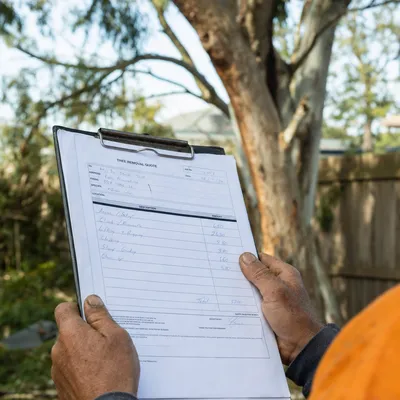
Written quote, line item by line item
A real quote splits out access, climbing, rigging, chipping, stump and tidy up. One round number with no breakdown means the bill can drift on the day.
On site visit, not just a phone price
Quoting a tree without standing on the block is guesswork. Insist on a walk through for anything bigger than a small backyard job.
Qualified arborist on the ropes
Ask who is actually doing the climb on the day, and whether they hold chainsaw and EWP tickets to operate the gear they bring.
Industry pruning standards
Pruning should follow recognised arboricultural cut practice. Lion tailing and topping break the rules and damage the tree's long term structure.
No big cash deposits up front
Most outfits invoice on completion or take a small card hold at most. Cash up front and then a no show is the classic scam pattern.
Branded truck, real chipper, signage on the door
Cold callers in an unmarked ute are almost always uninsured. A real crew turns up with a chipper, a tipper and a logo you can read from the kerb.
Recent job photos or references
Ask for two recent jobs from around the Hobart suburbs. A genuine outfit will name streets and send before and afters without a fuss.
08INSURANCE
09COUNCIL PERMITS
A few questions decide it under City of Hobart tree rules. If any answer is yes, check before the saw comes out.
Is the trunk 0.5m or more across at 1m above ground, or the canopy wider than 8m?
Bigger trees usually trip a permit requirement under Tasmania's planning rules.
Is the tree on a heritage register, a Significant Trees listing or a protected native species?
Significant Trees, heritage elms and habitat eucalyptus for listed species such as the swift parrot almost always need an application, regardless of size.
Is your property inside a heritage precinct or a vegetation protection overlay?
Overlay zoning sits on top of the standard tree rules. Check the planning report attached to your title before booking the job.
10 AFTER THE CUT
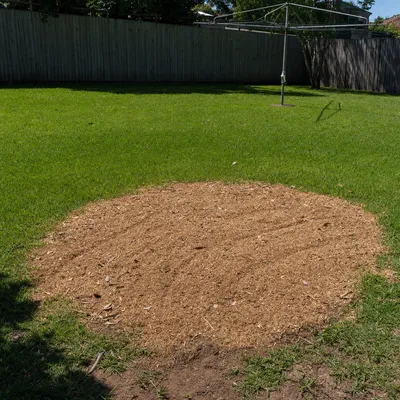
All the green waste goes through the chipper on site. Leave the pile where it sits, spread it through the garden beds, or pay a haulage line item to truck it off.
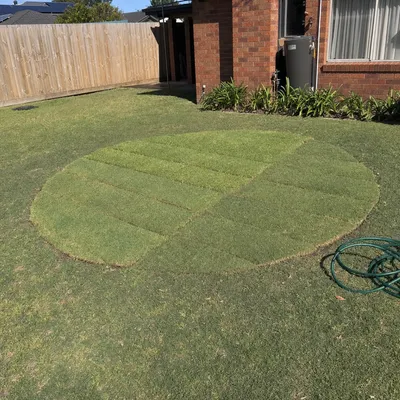
Stump grinding goes on the quote as its own line ($150–$400 typical). Once the grinder is finished, the spot can be turfed, paved or planted out straight away.
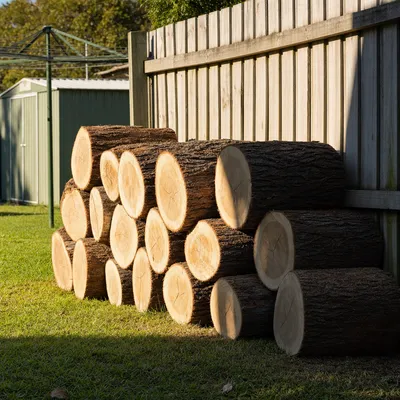
Suitable hardwood (gum, stringybark) can be rung into rounds and stacked along the fence on request, handy if you've got a wood heater or pizza oven.
When the stump comes out, fill the hole with screened topsoil and pack it down rather than topping it up with fresh chips, because chips slump as they break down and the spot will sink. For a lawn finish, lay rolled turf over screened topsoil and water in heavily for ten days while the roots take hold. For a garden bed, blend the existing chips through compost and let it sit a season before putting anything sentimental in the ground, because decomposing wood ties up nitrogen while it rots.
11BOUNDARY TREES
Rule.If the trunk sits inside your boundary at ground level, the tree is yours, even when the canopy reaches over the fence. You wear the removal cost and any permit fees.
What we do.We quote it like any other backyard job. If we need to come in through the neighbour's drive, we'll go knock first and check it's alright.
Rule.When the trunk straddles the fence line, both owners share the tree and the cost. Neither side can act on their own without written agreement in advance.
What we do.We won't drop a saw on a boundary tree until both owners have signed off in writing on the scope, the price and how it splits. Keeps it clean.
Rule.When a neighbour's tree throws branches or roots over the line, you can prune anything sitting on your side, but you pay for the work and the cuttings still legally belong to them.
What we do.We'll cut cleanly back to the boundary in line with proper arboricultural practice. Happy to have a quiet word with the neighbour first so it doesn't blow up later.
12 SERVICE AREA
A local crew working across Hobart and the surrounding suburbs, with every quote done on site. Don’t see your suburb? Get in touch. We likely still cover it.
13 WHAT DRIVES COST
Height, trunk diameter and how wide the canopy spreads are the biggest cost drivers on any job.
Steep driveways, tight side gates and limited drop zones often push the job onto an EWP or full sectional dismantle.
Anything close to a house, service line or pool calls for added rigging and more time on the ropes.
Grinding below ground level adds machine time. Species and root spread change how long it takes.
How much green waste comes down, what gets chipped and what has to be hauled all factor in.
After hours, weekend and storm jobs carry a higher rate than something booked in normal hours.
14 ABOUT THE CREW
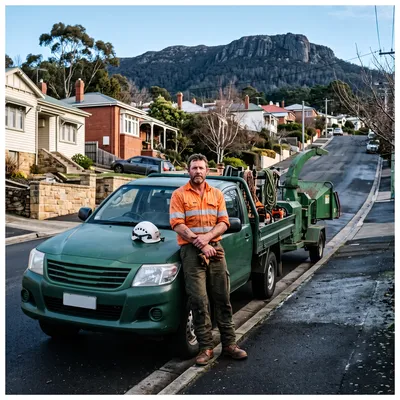
I run a small Hobart arborist crew. Most weeks we're climbing a blue gum on a Mount Stuart slope, dropping an oak in Battery Point or making safe after a Derwent westerly has put a limb through a carport in Sandy Bay.
We know the ground here. Tight terraced streets in Battery Point and Glebe, near vertical driveways into Lenah Valley and West Hobart, heritage elms lining North Hobart that need careful pruning, and the kind of wind exposure you only get when kunanyi/Mount Wellington funnels a westerly straight down across the city. Species outside the eucalypt family come up plenty too. Old macrocarpa hedges around Sandy Bay and Mount Nelson properties get heavy with wind-thrown limbs after a wet winter. The brittle wood snaps clean rather than tearing, which changes how we rig the cut. Blackwood on the Glenorchy and Kingborough fringe blocks grows tall and straight with a narrow root plate, so a leaning blackwood over a driveway is often quicker to drop than a wide-crowned gum. A straightforward backyard removal on a flat Kingborough block runs around $600 to $1,200. A leaning blue gum on a steep Mount Nelson slope, with EWP access needed, can run $3,000 to $5,000 once the rigging is factored in.
Hobart Tree Removal
qualified arborists, Hobart
Tree removal in Hobart usually runs from a few hundred dollars on a small backyard job up to several thousand on a big eucalyptus near a house or service lines. The price tracks tree size, access, risk, stump grinding and cleanup. Ring me or send the form and you'll have an indicative quote back the same day.
Yes. My crew are qualified, Hobart based arborists and we hold public liability cover. I can email through a current Certificate of Currency on request before the job starts.
I aim to have a same day reply on every enquiry and book non urgent jobs in within the week. Storm work and hazardous trees we run round the clock callouts on across Hobart and southern Tasmania.
Yes. Trees close to a house, fence, pool or service line come down sectionally, with controlled rigging on every limb so the load is lowered piece by piece. I walk the drop zone before any saw runs.
Yes. Emergency callouts across Hobart, including after hours runs for hazardous trees, hung limbs and storm work after a westerly off kunanyi/Mount Wellington.
Stump grinding goes on as a separate line. Add it in if you want the stump gone, leave it off if you'd rather deal with it later. We grind below ground level so the spot can be turfed, paved or planted out.
A small backyard tree is often a half day. A medium tree with rigging usually fills a full day on the block. Big trees, multi tree jobs and tight hillside access can roll across two or three days. The written quote spells out the timing for your specific job.
Yes. Green waste through the chipper on site, drop zone raked over, paths blown clean before we drive off. Mulch can stay in the garden, be spread for you, or carted off. Hardwood rounds can be cut for firewood and stacked along the fence on request.
Yes, particularly around blue gum and other eucalyptus that swift parrots and other listed species nest in around southern Tasmania. We check the tree before any cutting starts and pause, reschedule or work around an active hollow or nest if one turns up.
Yes. We handle defendable space clearing on bush interface blocks, including the kunanyi/Mount Wellington foothill suburbs. Multi tree jobs are priced together so you get a single quote covering the whole site.
Yes. I'll quote the job and walk both sides through what's involved. I won't start the cutting until both owners are on the same page about the scope and who's chipping in for what.
Storm damage to your house, fence or car is usually covered, including the make safe and the debris removal linked to the claim. Pulling out a healthy living tree, or routine pruning, is usually not covered. Ring your insurer before authorising the work and ask me for the job report and Certificate of Currency to send through with the claim.
Ask for a current public liability Certificate of Currency, an on site visit (not just a phone price) and a written quote with line items for access, climbing, rigging, chipping, stump and cleanup. Steer clear of anyone wanting big cash up front. Look for a branded truck, a real chipper and proof the climber holds the right tickets, cold callers in an unmarked ute are almost always uninsured.
A real quote shows separate lines for site setup, the climber or EWP, rigging and controlled lowering, on site chipping of green waste, optional stump grinding below ground level, haul away of chips or logs, and GST. A single round number with no breakdown usually means the bill can drift on the day.
If the tree was on your block, you are. Your home and contents insurer will usually pay for the removal if it has damaged something insured, ring them first and send photos before anything is moved. If a neighbour's tree fell on your place, you still organise the removal but you can recover the cost through your insurer if there's damage, or via the neighbour's policy if you can show negligence.
Permits are usually triggered by trunks over 0.5m across at 1m above ground, trees on the City of Hobart Significant Trees register, listed natives, swift parrot habitat or properties inside a heritage or vegetation overlay. Dead, dying or dangerous trees, fruit trees and trees under 3m are usually exempt. Always confirm with the council before booking the work, fines for unpermitted removal start around $2,000 and climb fast on listed species.
Tasmania actively manages Dutch elm disease and the heritage elms around North Hobart and the inner city are watched closely. We sterilise pruning tools between trees, never move green elm material off site, and bag and dispose of off cuts through a clean green waste stream to stop the disease spreading by beetle vector.
Most of the cost is risk and rigging, not the chainsaw work. A tree you can drop straight onto open lawn is quick and cheap. A tree behind a house on a steep hillside section, close to a roof or a service line, needs every limb roped and lowered piece by piece, that's hours of climbing, specialised gear and insurance cover. The actual cutting is the small part of the day.
Once the stump has been ground out, fill the hole with screened topsoil rather than just chips, because chips slump as they break down and tie up nitrogen in the soil. For a lawn finish, roll turf over screened topsoil and water it in heavily for ten days. For a garden bed, blend the chips through compost and let the spot sit a season before planting anything you'd be sad to lose.
Yes. A good share of the westerly storm work and hillside removals sit just as much in Glenorchy and Kingborough as they do inside the City of Hobart boundary. The permit rules differ by council though. Glenorchy City Council and Kingborough Council each run their own tree controls and their own definition of a significant tree, so I check which council actually covers the address before quoting anything permit affected.
Usually not. Macrocarpa and other planted conifers are rarely native or individually listed unless a specific heritage precinct names them. The City of Hobart's Significant Trees Register leans toward native eucalypts and notable specimens rather than exotic hedging. A few streets in Sandy Bay and Battery Point do carry precinct-level tree controls though, so I still check the address before recommending a hard cutback on an old hedge.
FREE, NO OBLIGATION QUOTES
Call or send through your details for a same day quote. qualified arborists, fully insured, locally based across Hobart and Tasmania.